The most evident and disabling symptom of long COVID is the overwhelming exhaustion you suddenly have to deal with: the postviral fatigue. With a large range of clinical presentations, fatigue generally leads to an incapacity to carry out one’s normal daily physical and cognitive activities. I often explain living with fatigue by using the methaphor of an old mobile phone battery, that you need to charge many times a day to be able to use it for a short period of time.
Unfortunately, the way to deal with fatigue is NOT to fight back in order to dominate your symptoms. In fact, ignoring the fatigue and pushing yourself too much makes you feel a lot worse, sometimes for days to follow. In my case, the result of too much physical or mental activity is feeling even more tired and the breathlessness becomes much worse. Recognisable? It took me quite a long time and a big deal of trial and error to finally realise that I had to stop for a moment, be patient and strategic….
If you search the literature or the internet for a solution to manage your fatigue, you will probably stumble upon the concept of ‘pacing’. To me, and perhaps most non – native English speaking population, this was a new and quite abstract term and at first I didn’t explore it much further.
But the longer I was ill, the more it appeared essential to find out how to handle the permanent exhaustion. During my search I learned that ‘pacing’ is indeed the key to managing your fatigue and thus, the way to get better. This post covers the basics of fatigue, I will therefore mainly focus on ‘pacing’, to build the foundation to your recovery.
Pacing is described as ‘finding the right balance on an individual basis between activity and rest‘. In other words, to alternate small flexible amounts of physical and cognitive activities with a longer period of rest/relaxation in between (Dr. C. Shepherd, Post Covid Fatigue Leaflet, The ME Association)
Again, this description of pacing remains quite abstract right? I think to really comprehend it, the time has come to give you an honest and lively example:
In the life I had before meeting Mr. Covid, writing this blog would have made me extremely enthousiastic, resulting in a marathon writing session every spare moment, probably till 00:30 AM, then sleeping maybe 6 hours before running to the hospital and working another 10-12 hours. I am not saying this is healthy and I am not proud to live like this, but it's what I was used to. Obviously, in the current long COVID life I'm living, I would have dropped dead a million times in this story. But after embracing the concept of pacing, I do still manage to write this blog, just in a different way: I allow myself to write for short periods during the day, with breaks and other activities in between. Is this easy? NO, I find it utterly annoying sometimes! But it works, and I so much want to get better that I commit myself to it. I even want to convince you to do the same, and I hope to take some pacing along in my life after Mr. Covid and I are over.
This example hopefully demonstrates that pacing works but doesn’t come natural to me, and it demands a genuine switch in my behaviour. I even need to plan my whole day in a schedule for the pacing to function in my life, as discussed in my next post. Of course, your fatigue doesn’t magically disappear by pacing. It is merely a tool to regain control over it and subsequently being able to recover. Other aspects of fatigue besides pacing, will be covered in more detail in further posts.
But first to help you get started, here are my personal key messages concerning the basics of fatigue in the box below:
- Rule out any other potential underlying physical conditions that could explain your fatigue! It’s obvious that you need to see a doctor to make sure that you are not suffering from any cardiac, pulmonary, haematological or any other kind of underlying illness. These could be both unrelated to COVID-19, or triggered and even caused by a recent episode of COVID-19.
- Pacing is essential. As extensively discussed here, this could form an important basis for your further recovery.
- Plan your day. After I understood the concept of pacing, it still didn’t work at all, because listening to my body and minding my boundaries is not my greatest talent (just being honest here ;). I believe this is partly due to my nature, but also somewhat due to nurture: stimulated by my job in the hospital, where very long working hours are not possible without ignoring your limits. However, as soon as I started to carefully draw and use a day schedule, the pacing started to work and more importantly: pay off! Read more about using a day schedule in the next post here.
- Get enough sleep. Of course sleeping hours vary from person to person, but sleeping more than usual helps me very much in dealing with my fatigue and energy levels during the day. I also inserted a short sleep during the afternoon in my day schedule.
- Challenge yourself. I believe that challenging yourself is something different than pushing yourself. Once you figure out how the concept of pacing works, I think it is important to start challenging yourself. Read more about this challenge here.
- Keep a diary to monitor your process. I normally never write a journal, but now I use a tiny booklet to keep track of my daily sleeping hours, activities, nutrition (more or less) and of course my energy levels and potential symptoms. This could help you find your optimal rhythm and tell you where to adjust if necessary.
- Get informed. During my search for helpful scientific information on long COVID, I came upon a series of fatigue-videos by established healthcare professionals in the UK. I must say that these videos were extremely valuable for my recovery, because they clarified a lot and inspired me. I greatly recommend watching them as part of your basic fatigue knowledge. Here you can find these videos and a selection of other recources that have been most useful to me.
- Cherish your friends and family. I honestly wouldn’t have known what to do without them. Sometimes it takes courage to ask for help, but you will probably need it… I feel especially blessed with my newlywed husband who is still not entirely tired of my new grandma role, and who has done everything for me for months!
You can view all other posts here
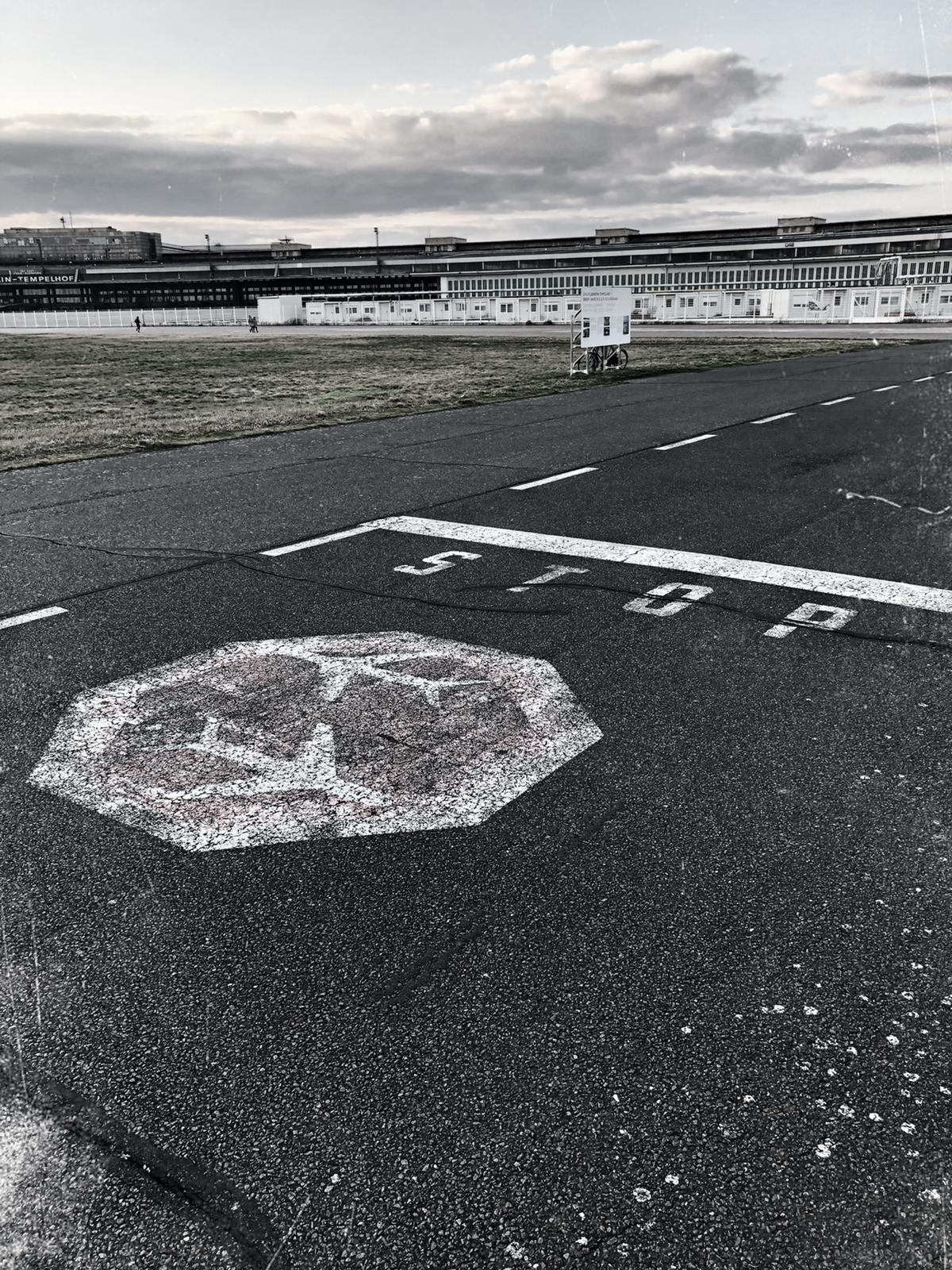
Image: the former Tempelhof airport in Berlin, by my sister Marcella
 Me & Mr. Covid: diary of a long-term relationship