I have a hate-love relationship with yoga: I like the physical exercise and relaxation that it brings, but I was never really drawn to the spiritual aura surrounding yoga. Especially in certain yoga studios in Berlin, buzzing Om sounds often made me hesitate to join a class. After months of coughing and immobilisation however, I learned that it is essential to awaken and carefully stretch your body in order to get back on your feet. For that purpose, yoga-like exercises are honestly a must!
The Om chants are not in my repertoire, but feel free to Om yourself…
Why bother? Because your (torso) muscles have most likely become stiff and weak due to excessive coughing and immobilisation. This is one of the main reasons for feeling breathless* during minimal physical activity. As a result of this breathlessness, it remains extremely difficult to get stronger and active again and you end up trapped in a breathlessness-inactivity-circle.
To help you escape this ‘breathlessness-inactivity circle’, I will share my daily stretching and yoga exercises with you. My advise is to contact your doctor or physiotherapist before joining if you have a known musculoskeletal disorder, or if anything feels not right during an exercise.
That being said, your biggest risk is merely to exhaust yourself depending on where you stand in your recovery. A few months ago, I was only able to perform exercise 1 and 7 before crashing weakened on the couch again. Now I am stronger and I manage all exercises on most days, but I have carefully and gradually built up this routine over time. Clearly, these exercises are all very easy for healthy individuals, but not for those dealing with Mr. Covid. I therefore propose the following rules upfront:
1. Please be gentle with your weak body
2. Please pay attention to the degree of difficulty of each exercise and skip the ones that are too challenging
3. Please don't forget to pace, and assess your energy levels before starting
4. Put on some music to make things a lot more pleasant
Now let’s start!
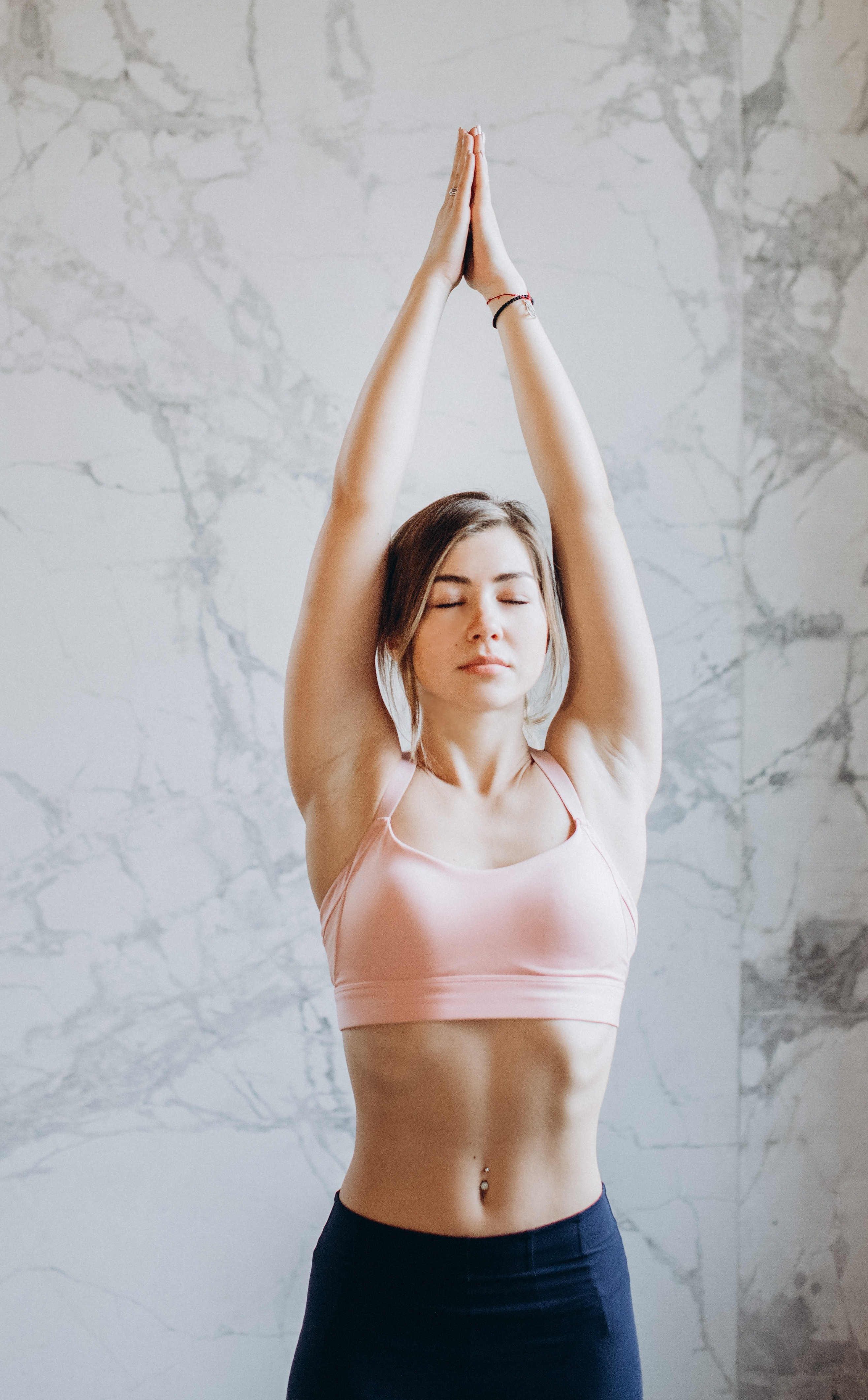
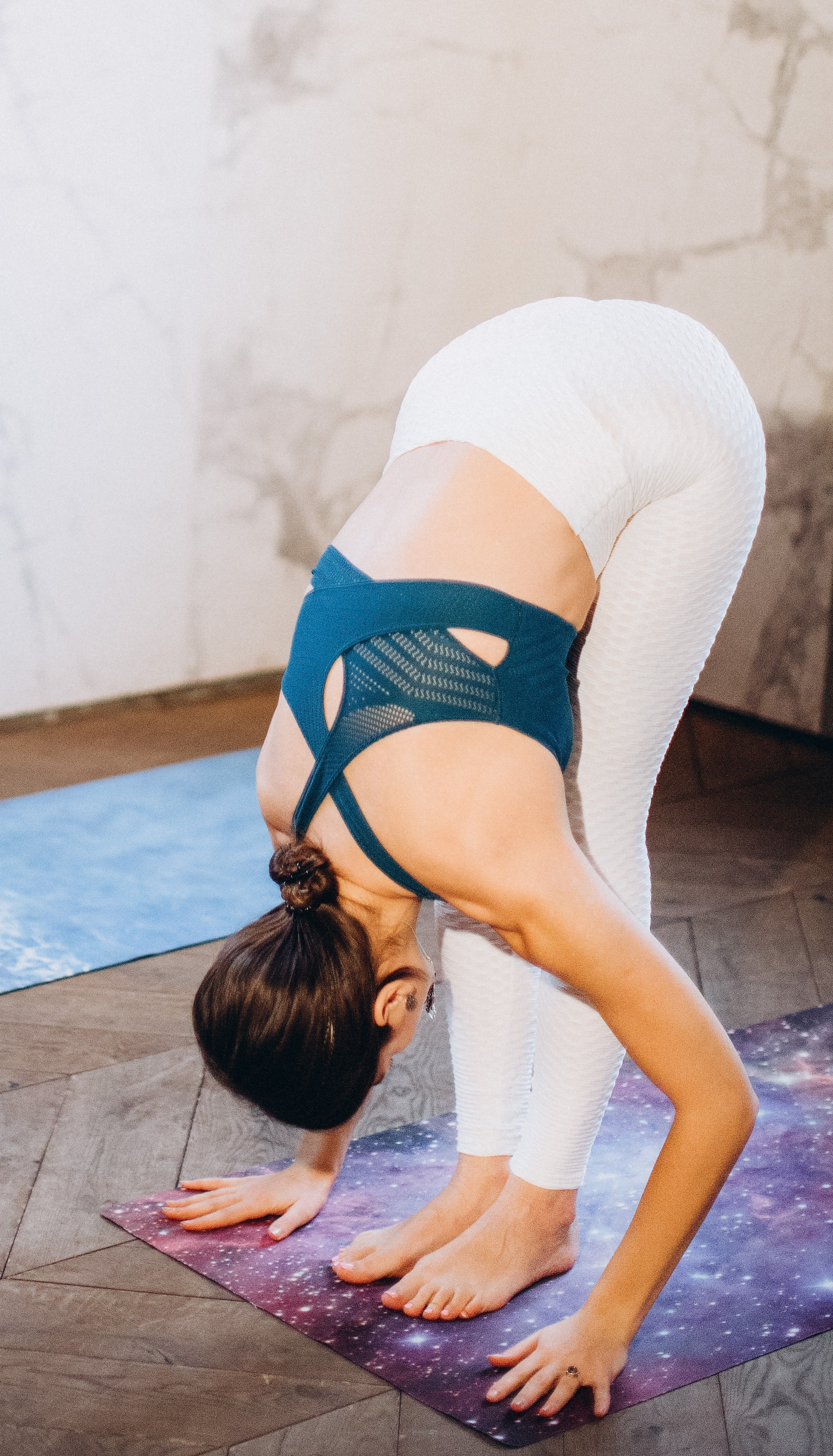
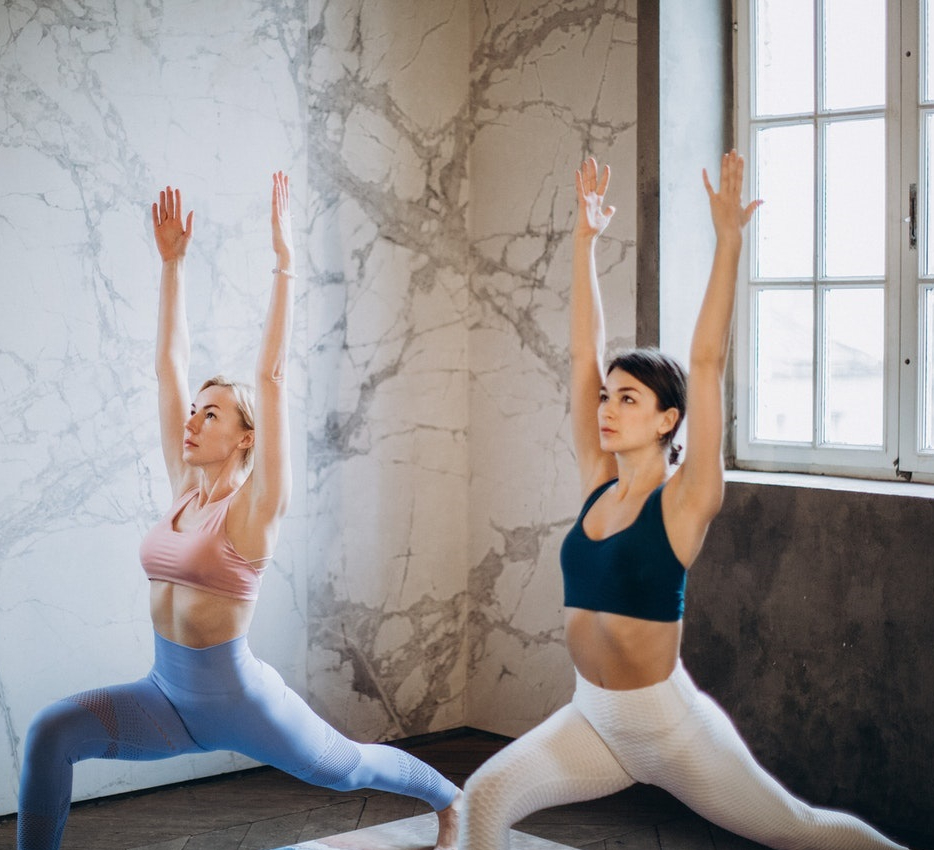
Exercise 1 (LIGHT): to relieve tension and open your chest
Stand on your feet and as you inhale, elongate through your torso and extend your arms up (left figure). Stay for 1-2 breaths. On the next exhale, slowly let your back drop down, as far as remains comfortable for your hamstrings (right figure).
Stay for 1-2 breaths. As you exhale, lift up your head and look to the front. Get up slowly on the following exhale.
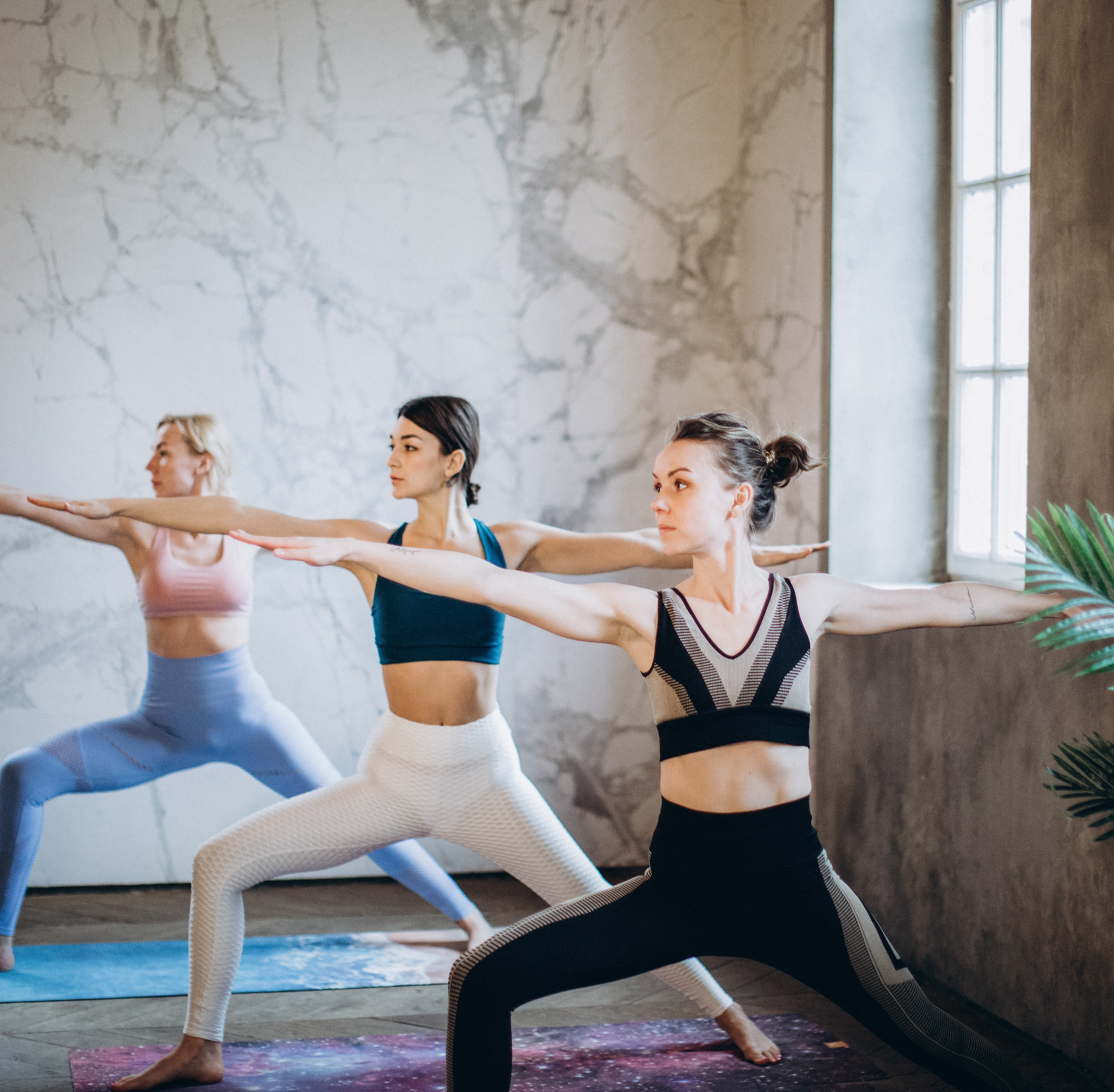
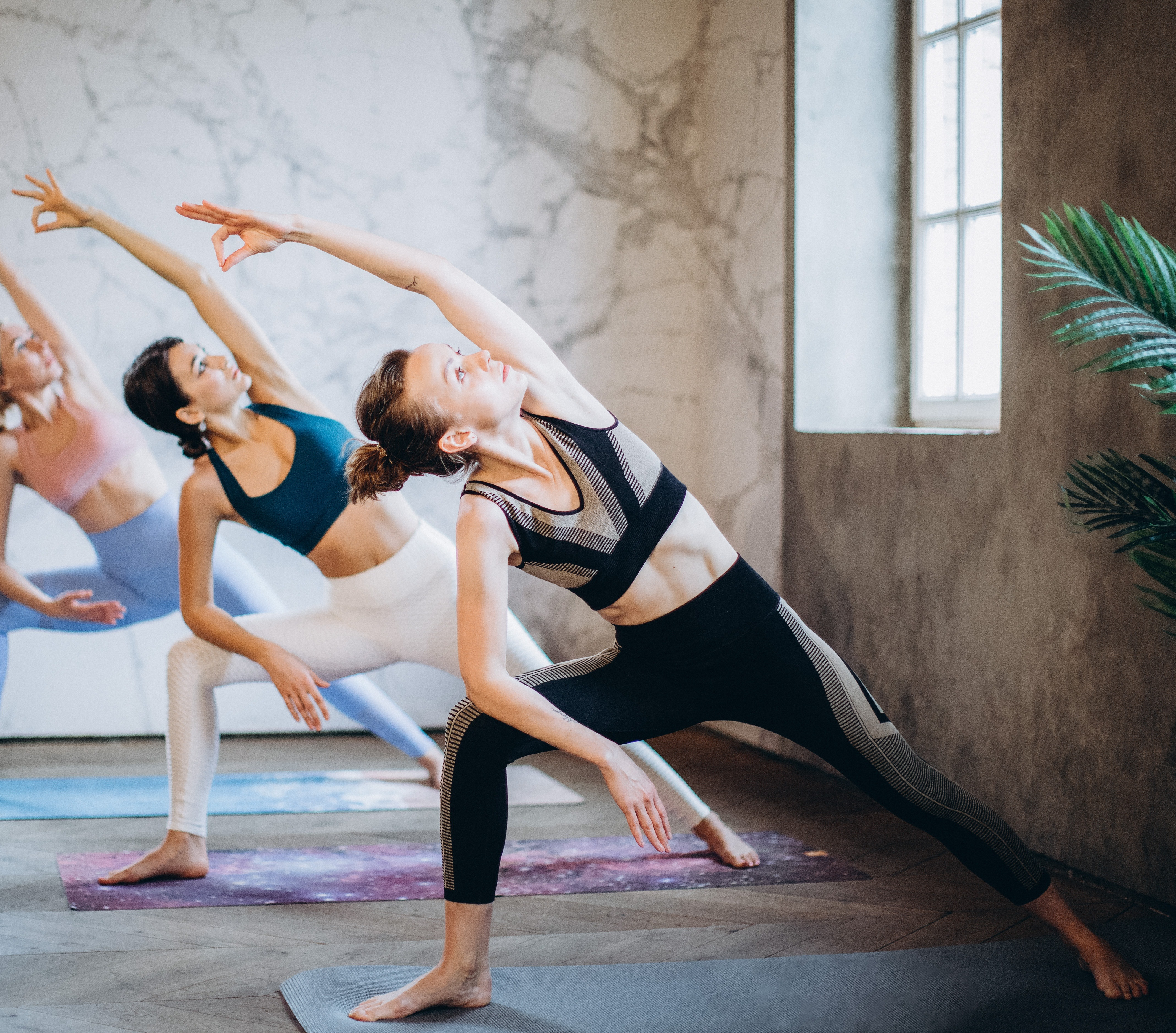
Exercise 2 (LIGHT): to open and stretch your intercostal muscles and diaphragm
Step forward with your right foot and turn your left foot 90 degrees facing the left wall, your head facing the front (left figure). Stay for 1-2 breaths. On the next exhale, put your right forearm on your right knee and look towards the ceiling. Lift your left arm towards the ceiling (right figure). Engage your abdomen if you lose your balance!
If you are stronger, you could put your right hand on the floor.
Exercise 3 (LIGHT-MODERATE): to stretch your hips and bottom, mobilise your spine and intercostal muscles
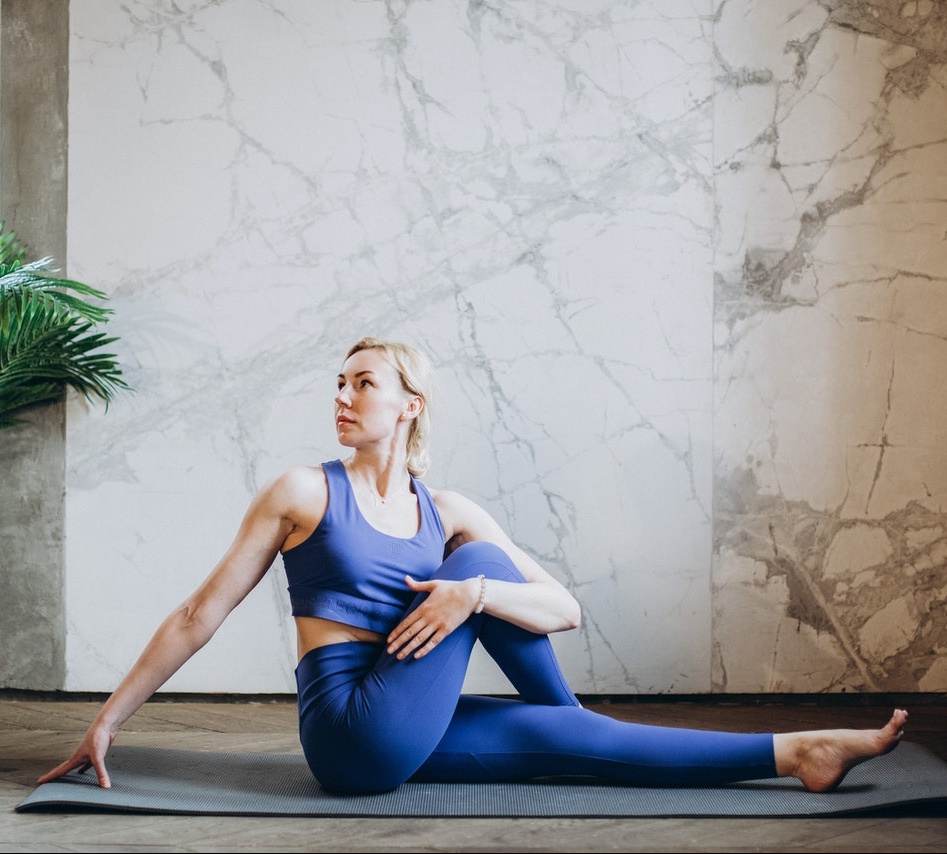
From the last position in exercise 2, turn to the right facing the front as in the left figure. Stay for 1-2 breaths.
Put your hands on the floor, lean down on your right hip and turn 180 degrees on the floor facing the opposite direction. Keep your left leg stretched while crossing your right leg over your left knee (right figure). On the next exhale, turn your back by looking to the right. Don’t forget to stretch your upper body.
I switch sides here and do exercises 1-3 in reverse order with my left side before moving to the next exercise.
Exercise 4 (LIGHT-MODERATE): to relax your neck muscles and lower back, stretch your hips and chest
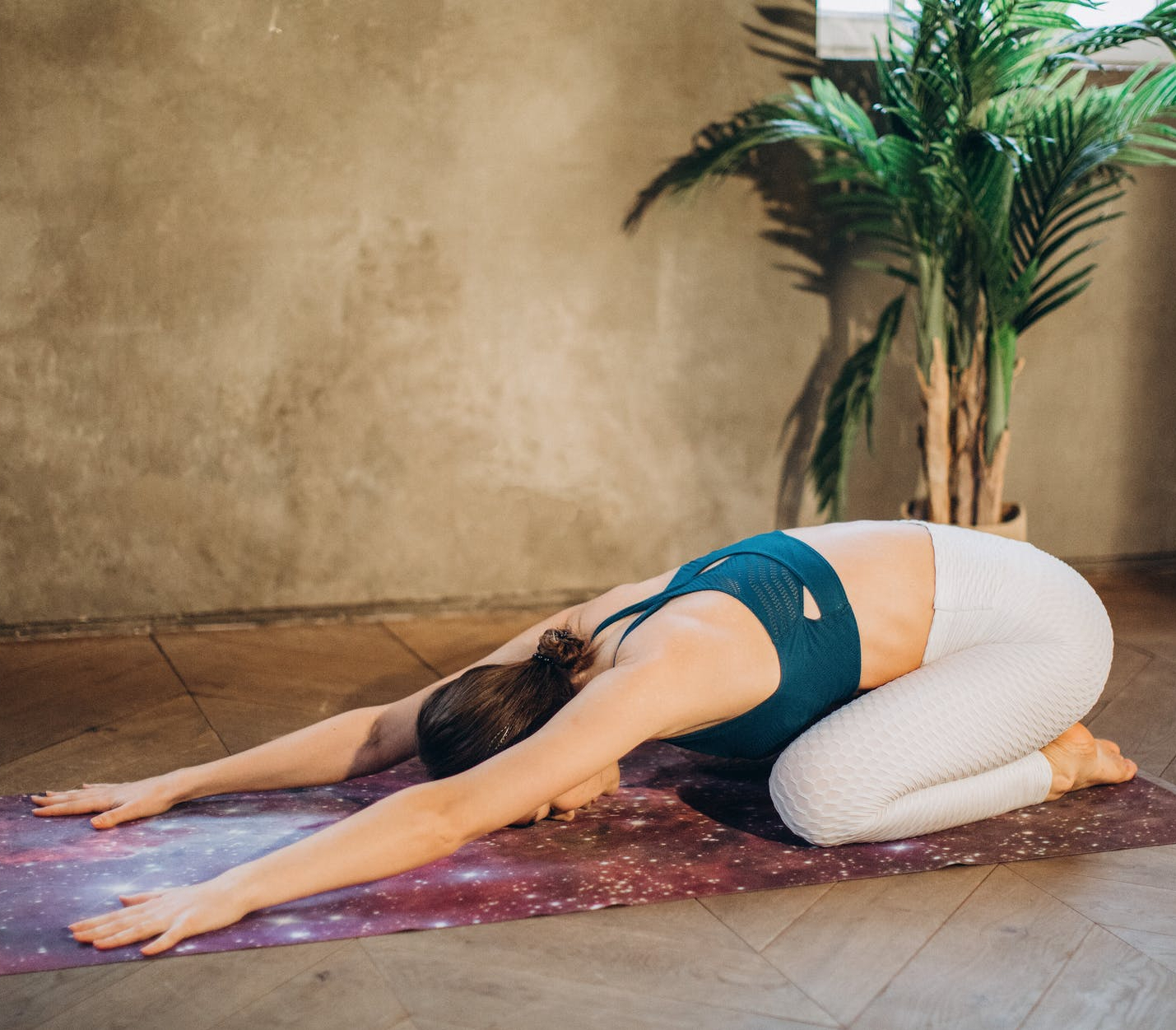
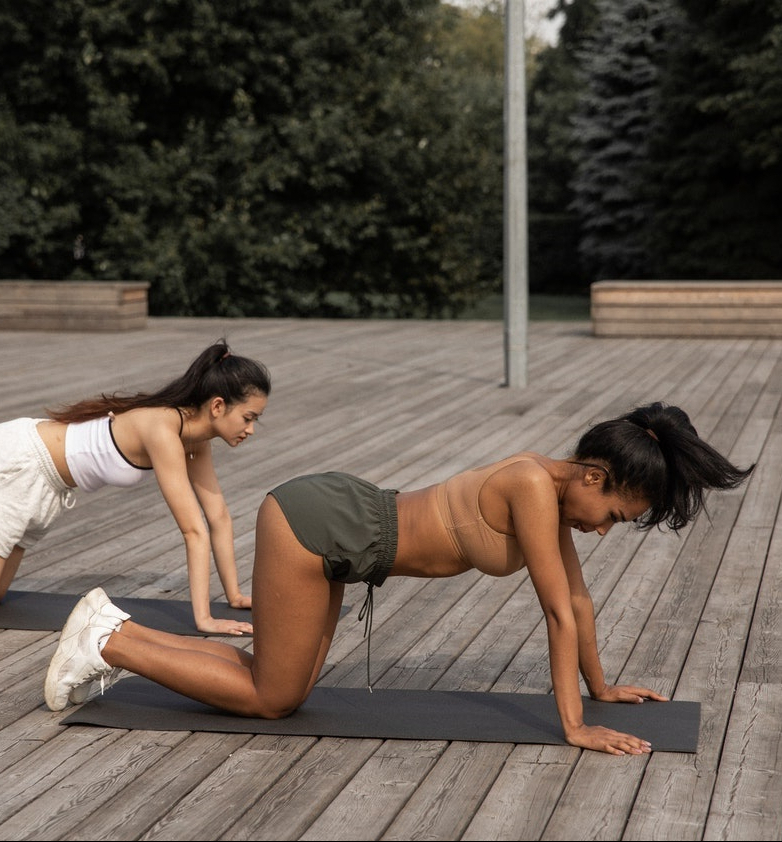
Start in a kneeling position with your toes tucked under, lower your bottom towards your heels and extend your upper body to stretch your back (left figure). Stay for 1-2 breaths. Move your weight on your hands and watch the ceiling as you exhale (right figure). Try to open your chest and straighten your neck.
If possible, combine with exercise 5.
Exercise 5 (HEAVY): to loosen your lower back, straighten and strengthen your upper back
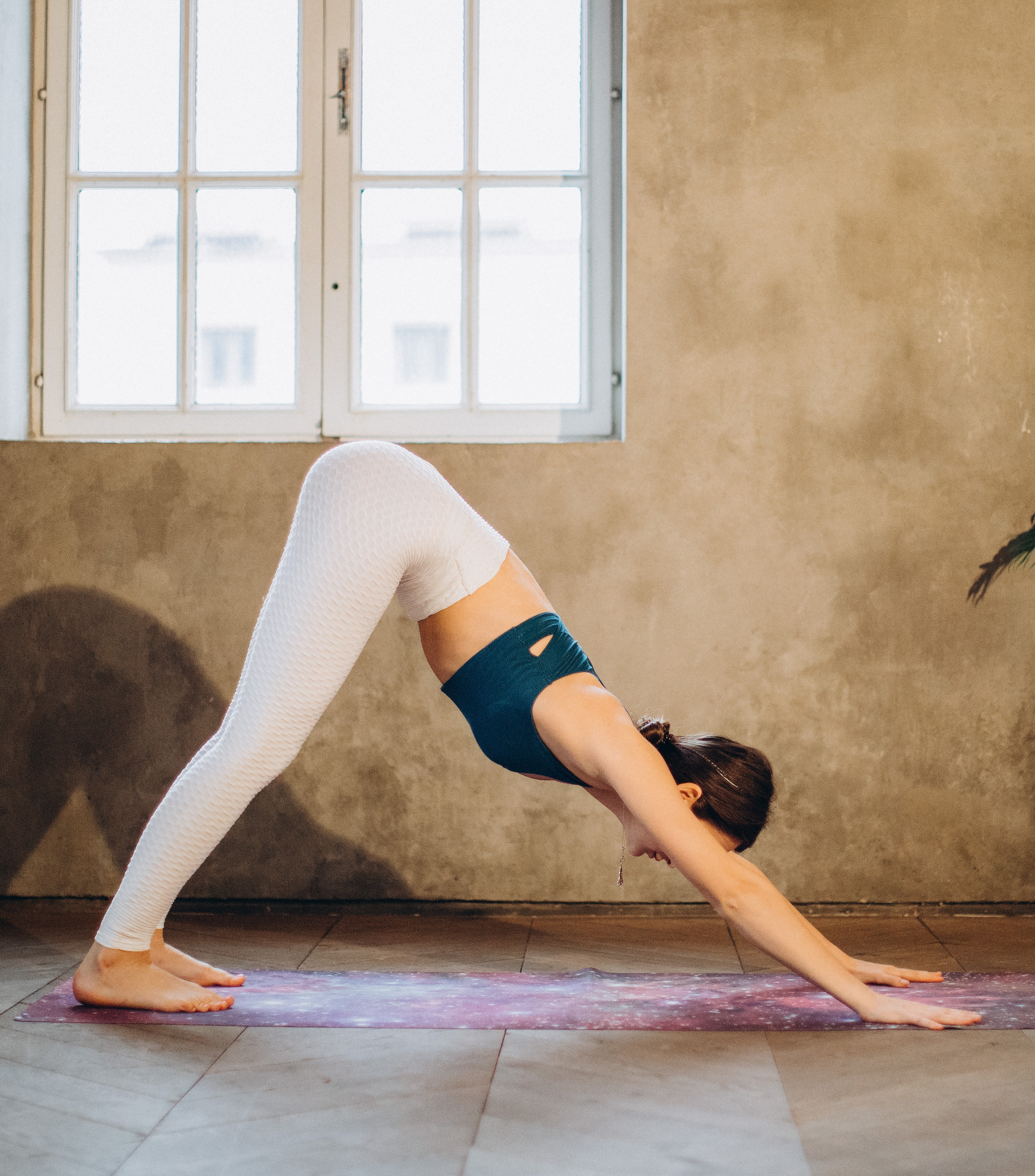
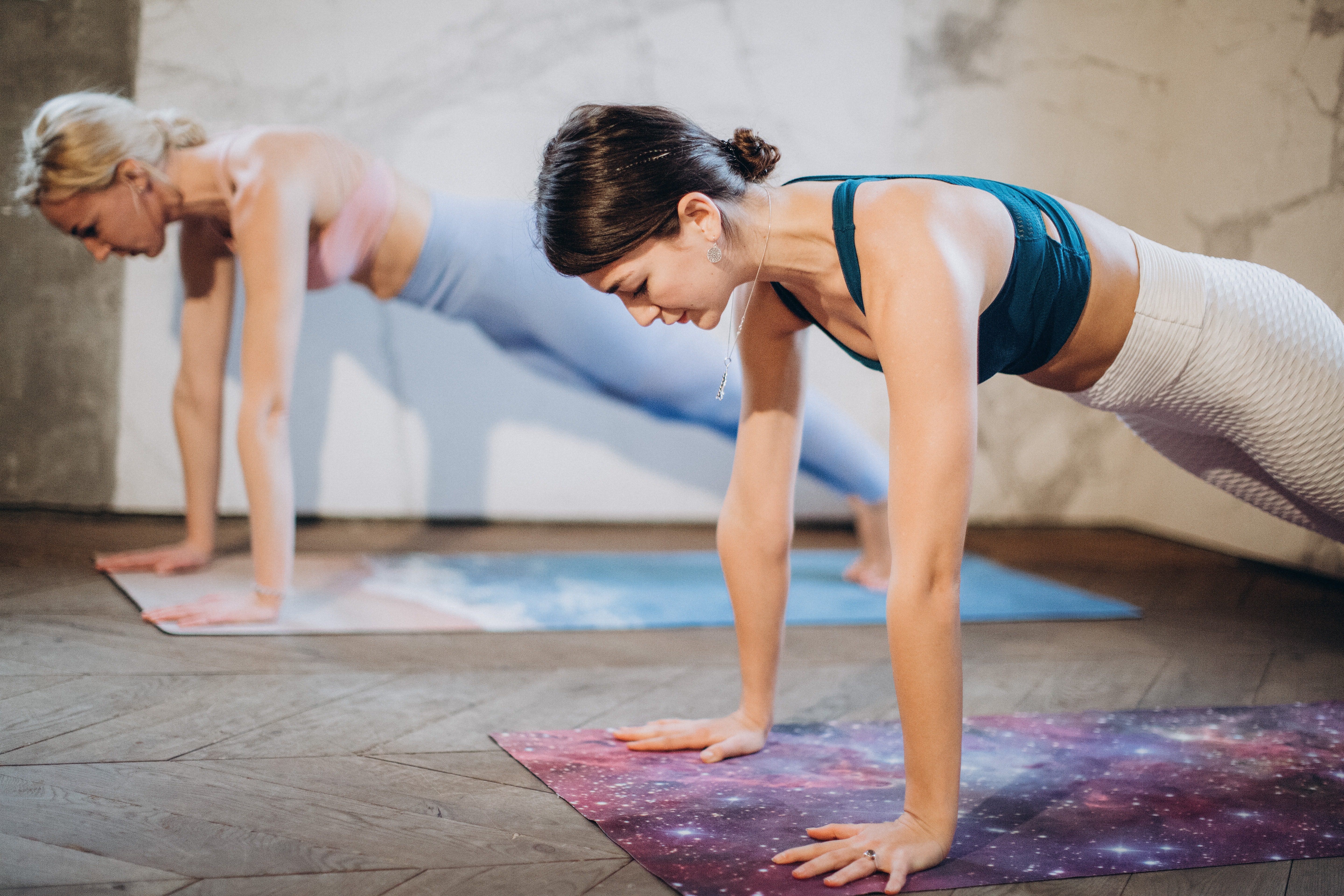
I could never have managed this ‘downward facing dog’ position a few weeks ago. I still totally cheat to get in this position from the endpoint of the last exercise by placing my knees on the floor before lifting my bottom as I exhale (left figure). Stay for 1-2 breaths. Most important: extend your upper back!
On the next exhale, replace your weight forward and feet backwards to form the plank (right figure). Straighten your back.
Exercise 6 (LIGHT-MODERATE): to relieve muscles of your chest and upper back
From the plank, place your knees down (left figure). As you exhale, extend your left arm to the ceiling and open your chest by facing the ceiling (right figure). On the next exhale, lower your left arm, crossing under your chest and reaching towards the right wall (no picture). If you want to increase this stretch, you could lower your head to the floor facing right (right figure).
Exercise 7 (LIGHT): to loosen the back of your legs
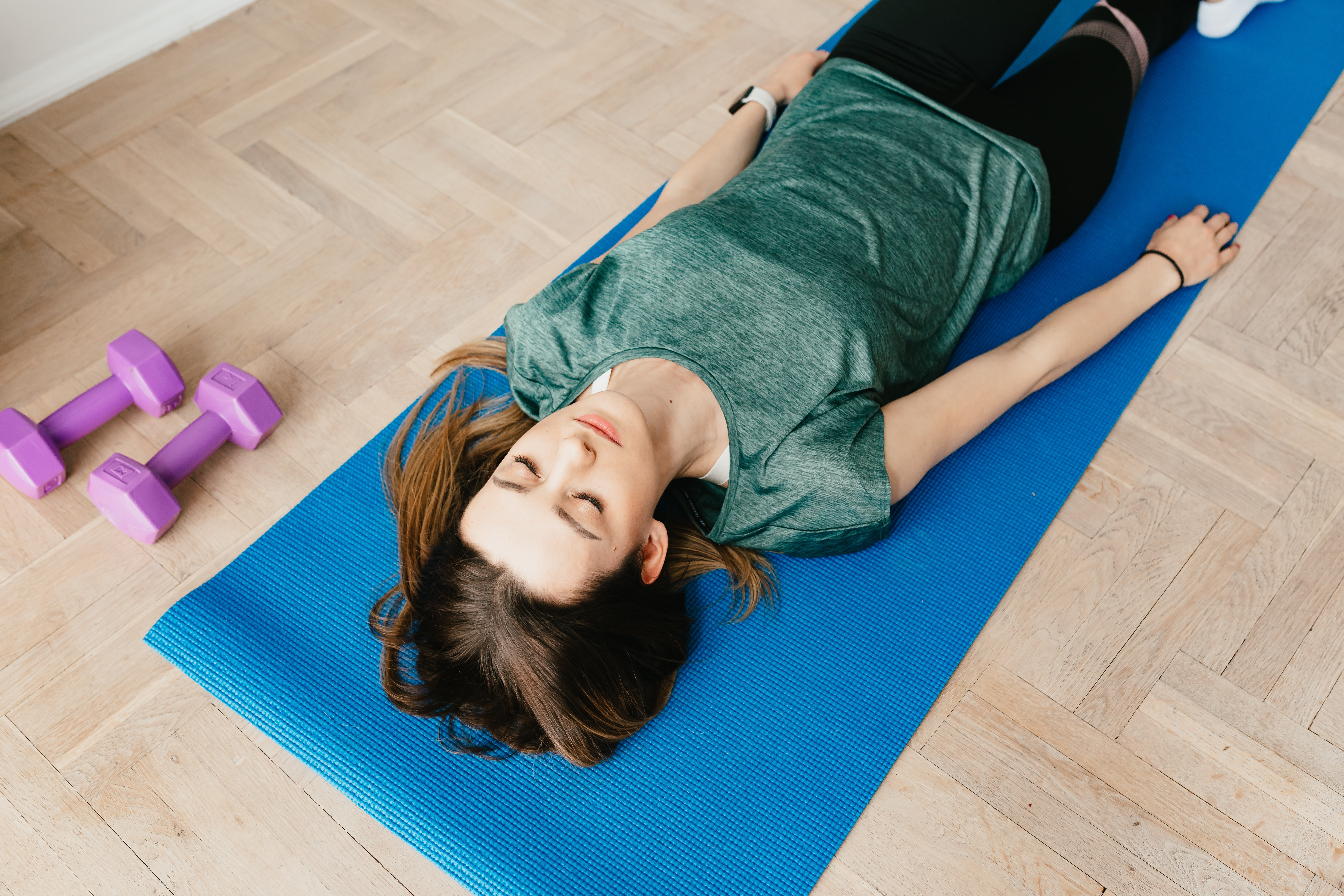
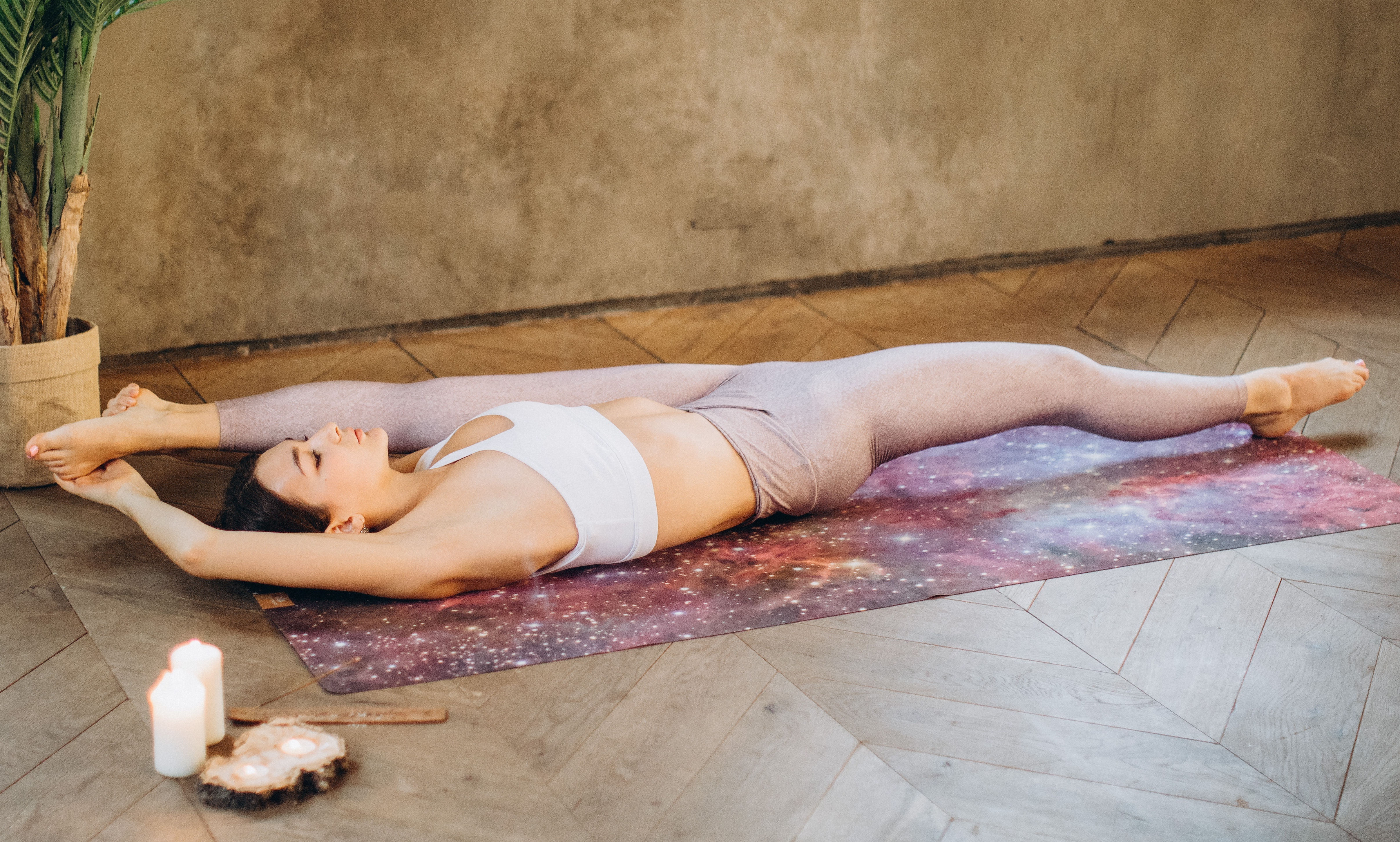
Now we arrive at a more relaxing part: lie down on your back on a blanket or yoga mat. Start by pulling your left knee to your chest, stay for 1-2 breaths and then straighten your left leg to stretch your hamstrings. If possible, turn your leg to the left as you exhale (right figure).
After a few breaths, bring your leg down into the starting position and notice the funny sensation that your left leg feels longer then your right! I still love this after a thousend times… Repeat on the other side.
Exercise 8 (LIGHT): to loosen your diaphragm and lower back, relax your breathing
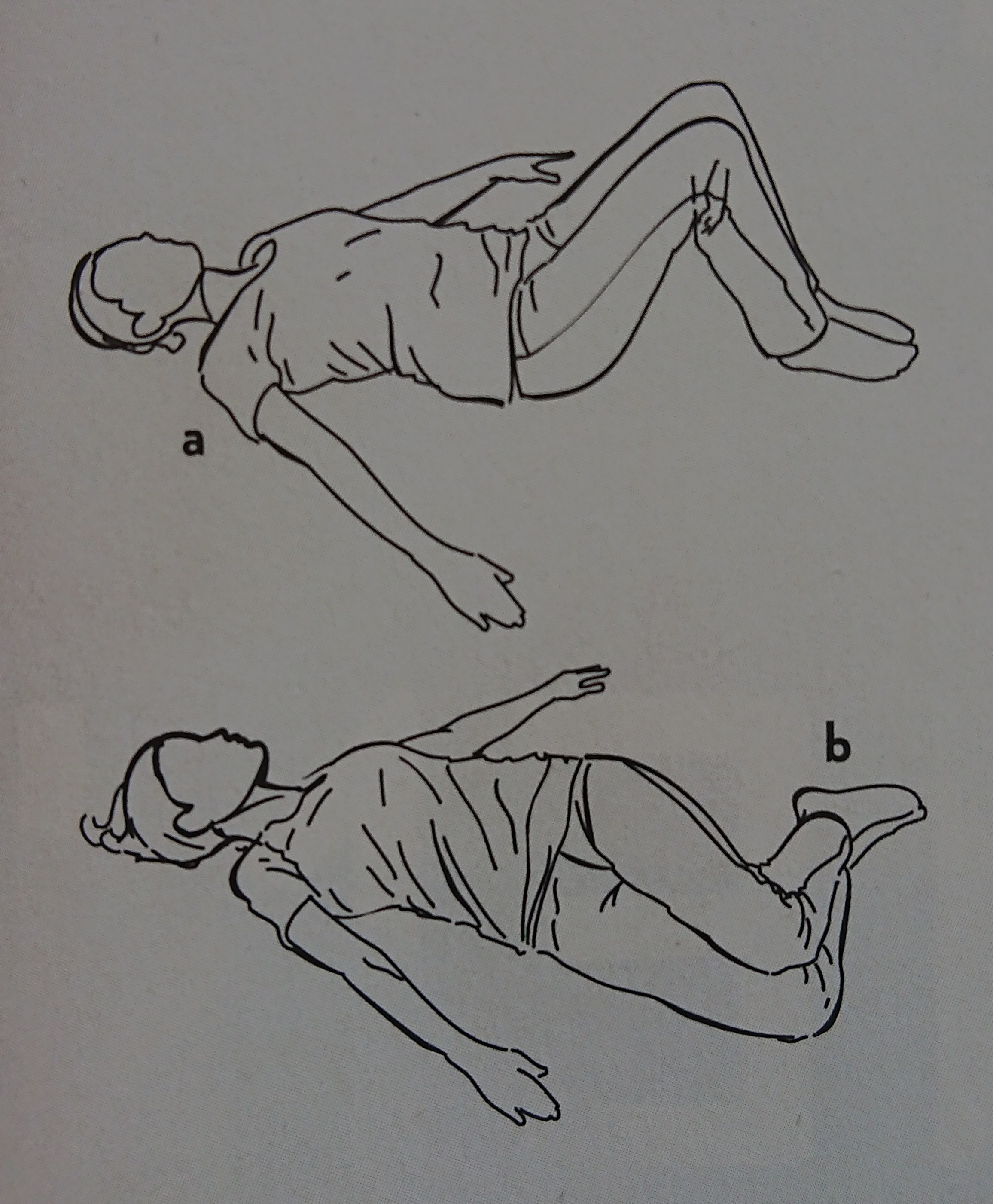
While still laying down, pull your knees up with your feet close to your bottom and inhale. Let your knees drop to the right as you exhale (left figure). Stay for a few deep breaths and bring your knees back on the next exhale. Switch sides.
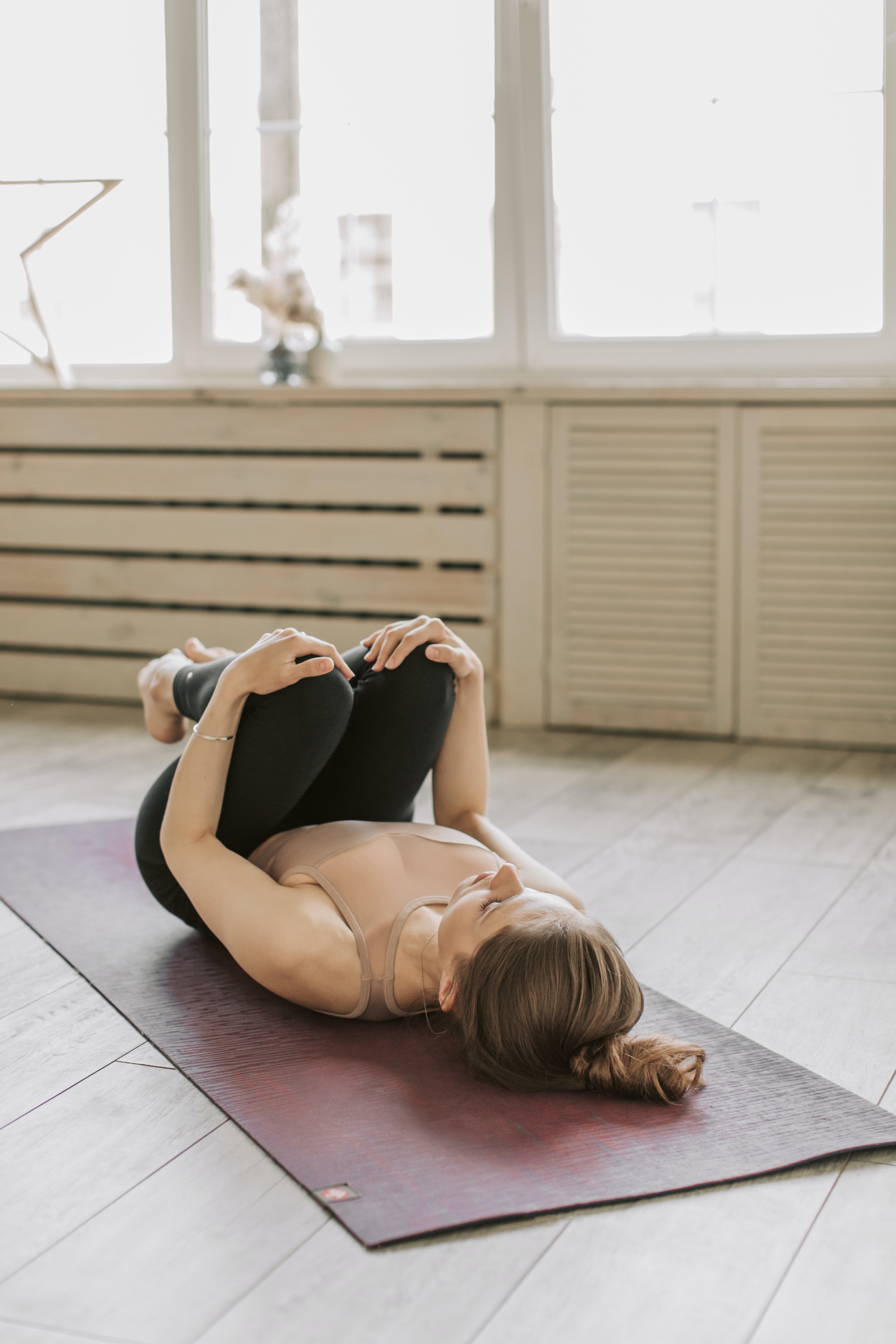
Back in the starting position, pull your knees up to your chest and massage your lower back and pelvis musculature by circling your pelvis while holding your knees (figure in the middle). This may feel a little uncomfortable if you have tense muscles, but you’ll love it after a few days.
I also do some easy abdominal exercises, for example cycling in the air, or lifting my pelvis with my feet close to my bottom (right figure).
Exercise 9 (LIGHT): to relieve and stretch tense intercostal and neck muscles
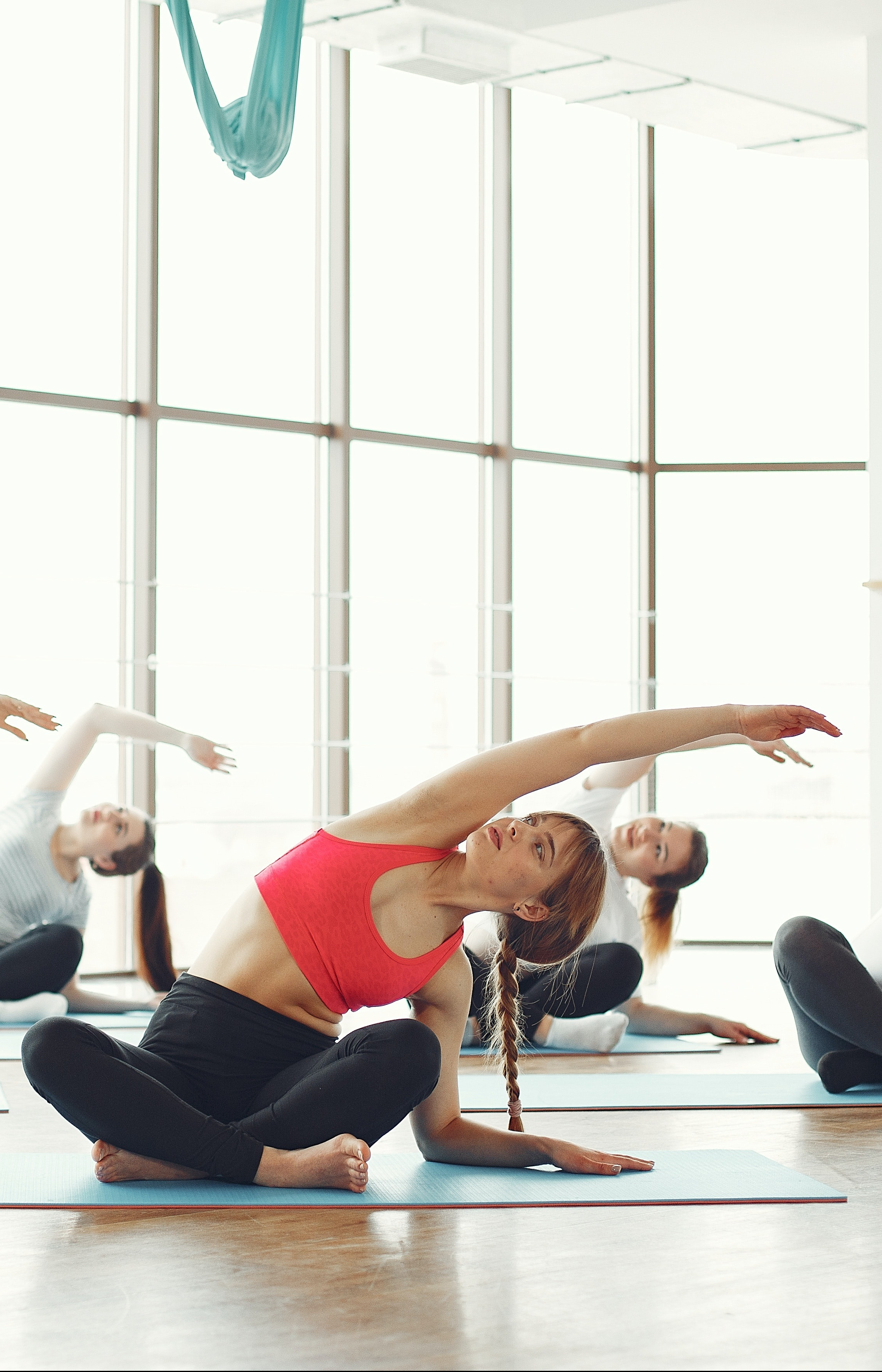
Sit down as demonstrated in the picture (I actually prefer to sit on my knees), inhale, and extend your left arm above your head (keep your shoulders low). As you exhale, stretch over to the right side and face the ceiling. Return to the starting position on the next exhale. Switch sides.
Then place your right hand on your left ear without pressure and let your head gently drop to the right side to stretch your neck. Switch sides.
Exercise 10 (LIGHT-MODERATE): to stretch your quadriceps and improve your balance
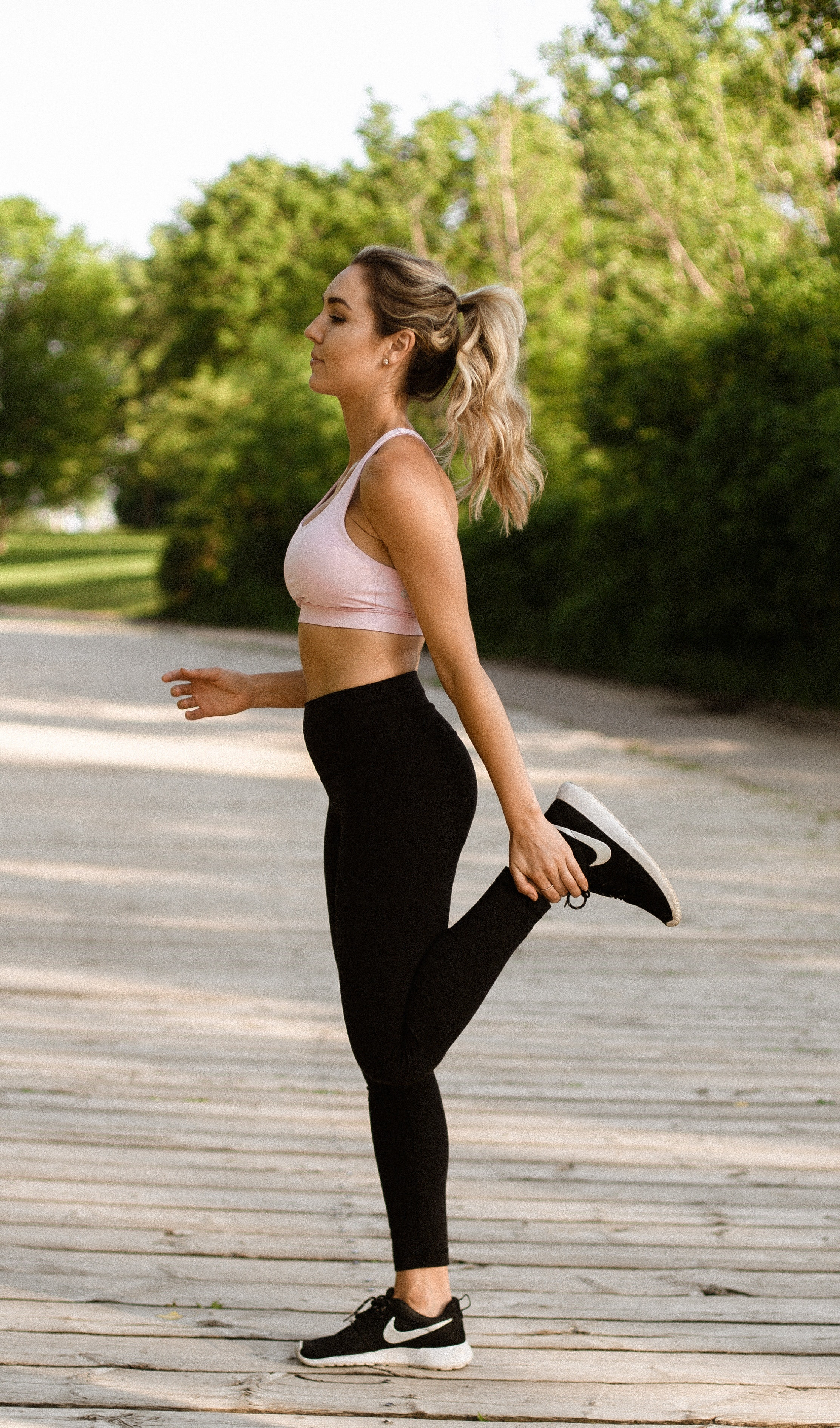
Gently get up and stretch your quadriceps by standing on one leg and taking your other heel to your bottom. Drop your pelvis and straighten your lower back (left figure).
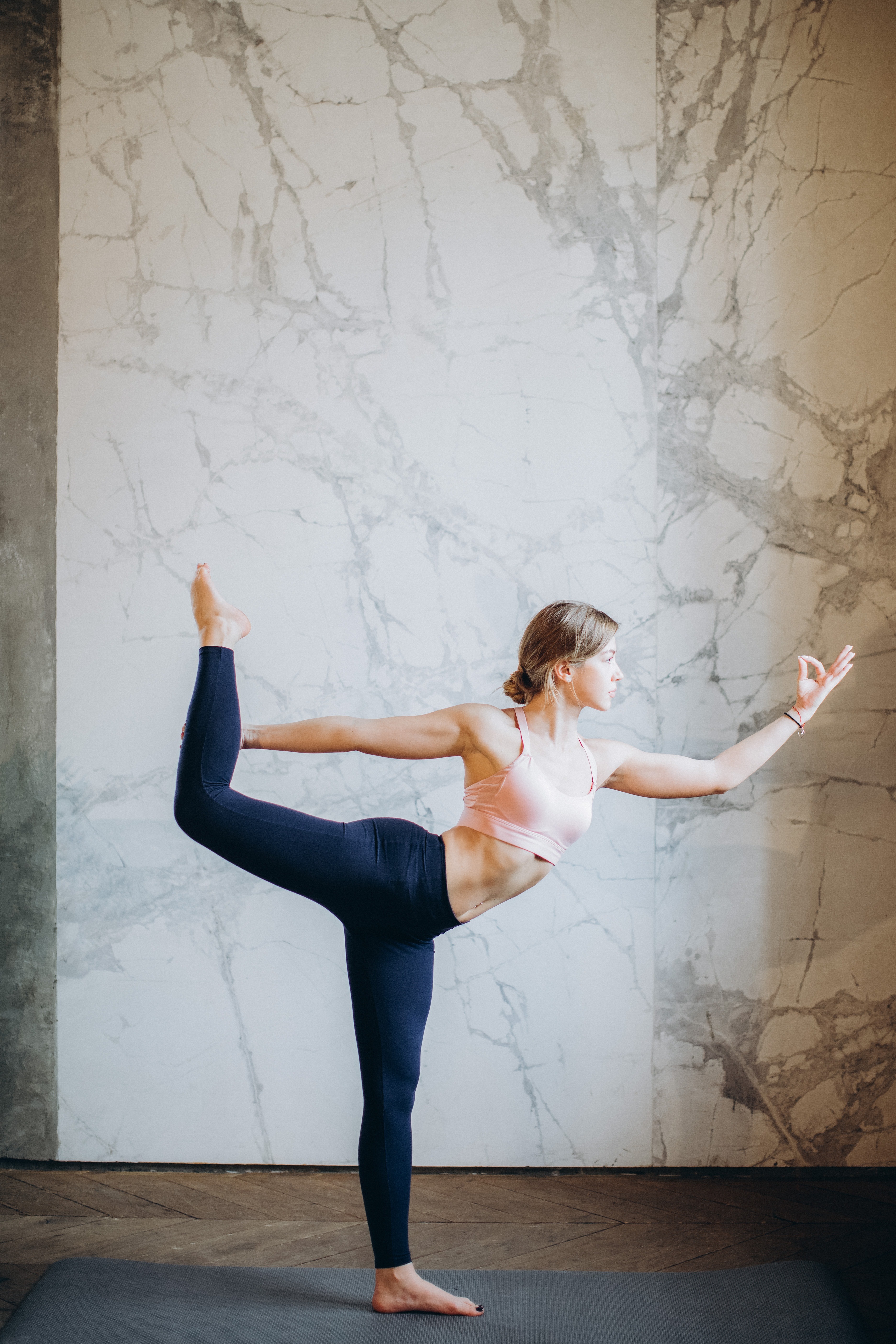
On the next exhale, you could test your balance by gently lifting your leg behind you (right figure). Engage your abdomen and use a fixed focus point if you tend to lose balance. Switch sides.
Did you know that:
You can use yoga to improve your breathing by releasing your diaphragm and strengtening the muscles of your chest. For this, try to breathe deeply and regularly, and more into your abdomen and lower back then superficially into your chest.
* breathlessness may be caused by many potential underlying conditions that you need to exclude with your doctor upfront.
You can view all other posts here
Images by Pexels






 Me & Mr. Covid: diary of a long-term relationship